.avif)
![Venture capital trends and statistics in 2026 [new data]](https://cdn.prod.website-files.com/642b3b2440806566d7573934/6a7a31b1282ad91171af9142_venture-capital-trends-and-statistics_%402x.webp)

Ready to invest in AI?
Schedule time with Zeni's finance pros to learn more.
Thank you! Your submission has been received!
Oops! Something went wrong while submitting the form.
This report breaks down our original research into venture capital trends and statistics for the first half of 2026.
We’ll cover how much startups are raising, how AI is reshaping investor behavior, which industries and regions are attracting the most funding, and more. We’ll also explore some of the practical implications of these trends for founders.
The first half of 2026 has seen a substantial surge in venture capital (VC) fundraising. Between January 1, 2026, and June 30, 2026, venture capital firm investments totaled $498 billion across 12,922 companies.
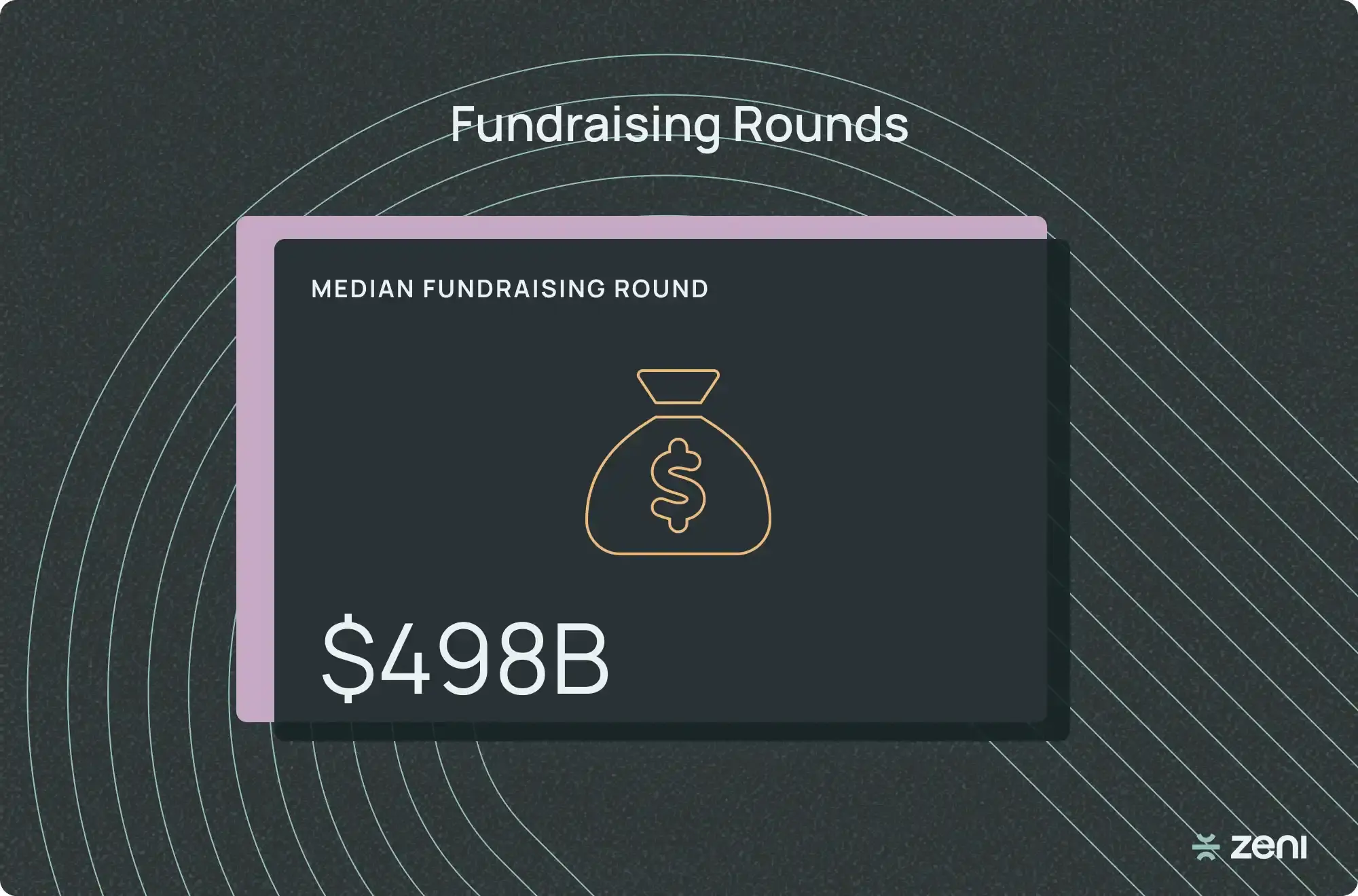
To put that amount into context, the gross domestic product (GDP) of Denmark was just $463 billion in 2025, according to the latest Federal Reserve Data.
Nearly half a trillion dollars in venture capital funding spread across roughly 13,000 companies works out to an average round size of $55.6 million. At first glance, that may seem to suggest that VC investors have been writing unusually large checks.
However, averages only tell one part of the story. The median funding round came in at just $4.1 million, more than ten times smaller. This is a reflection of a relatively small number of outsized deals that have skewed the average upward.
The most significant example is OpenAI, which raised $122 billion in a single funding round on March 31, 2026. That deal alone accounted for nearly a quarter (24.5%) of all venture capital raised during the first six months of 2026.
Understanding how these outliers can influence metrics is important for founders. Accounting for their impact on averages and other market-wide measures can help you benchmark your fundraising expectations more accurately.
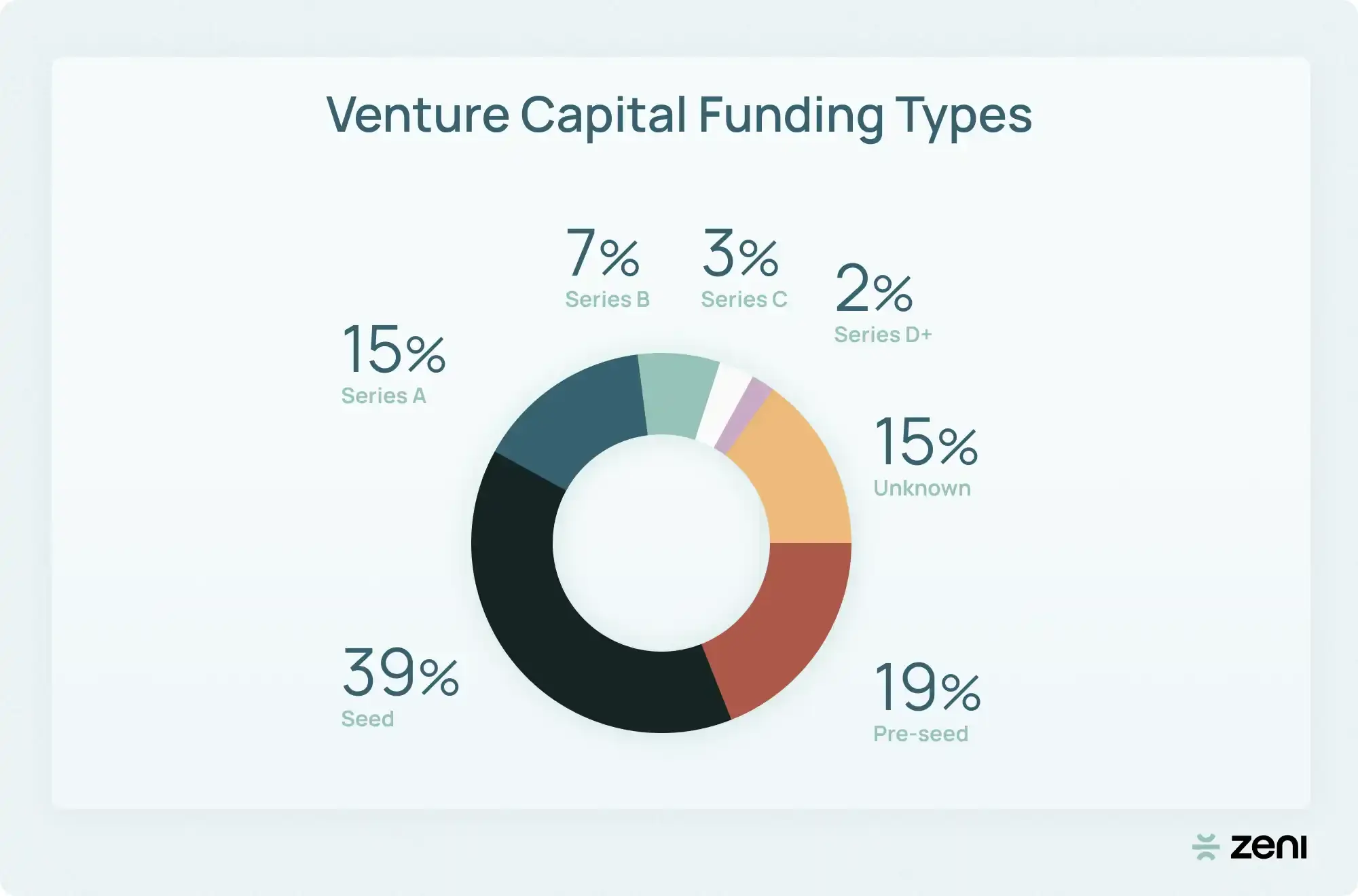
It’s also worth noting that while a handful of mega-rounds may have captured much of the venture capital in 2026, the overwhelming majority (73.5%) of the roughly 13,000 rounds to date have involved Pre-Seed funding, Seed funding, and Series A companies.
In other words, the biggest checks may be reserved for more mature companies, but plenty of early stage startups are still having success with venture capital raising.
Venture capital activity has experienced a meaningful shift over the past few years. Total VC investment amounts have risen dramatically, growing from $131 billion in the first half of 2023 to $498 billion in the same period of 2026—a 280% increase.
However, that rapid growth hasn't been evenly distributed. The largest funding rounds have increased much faster than the broader market, pushing the average deal size to record levels as well.
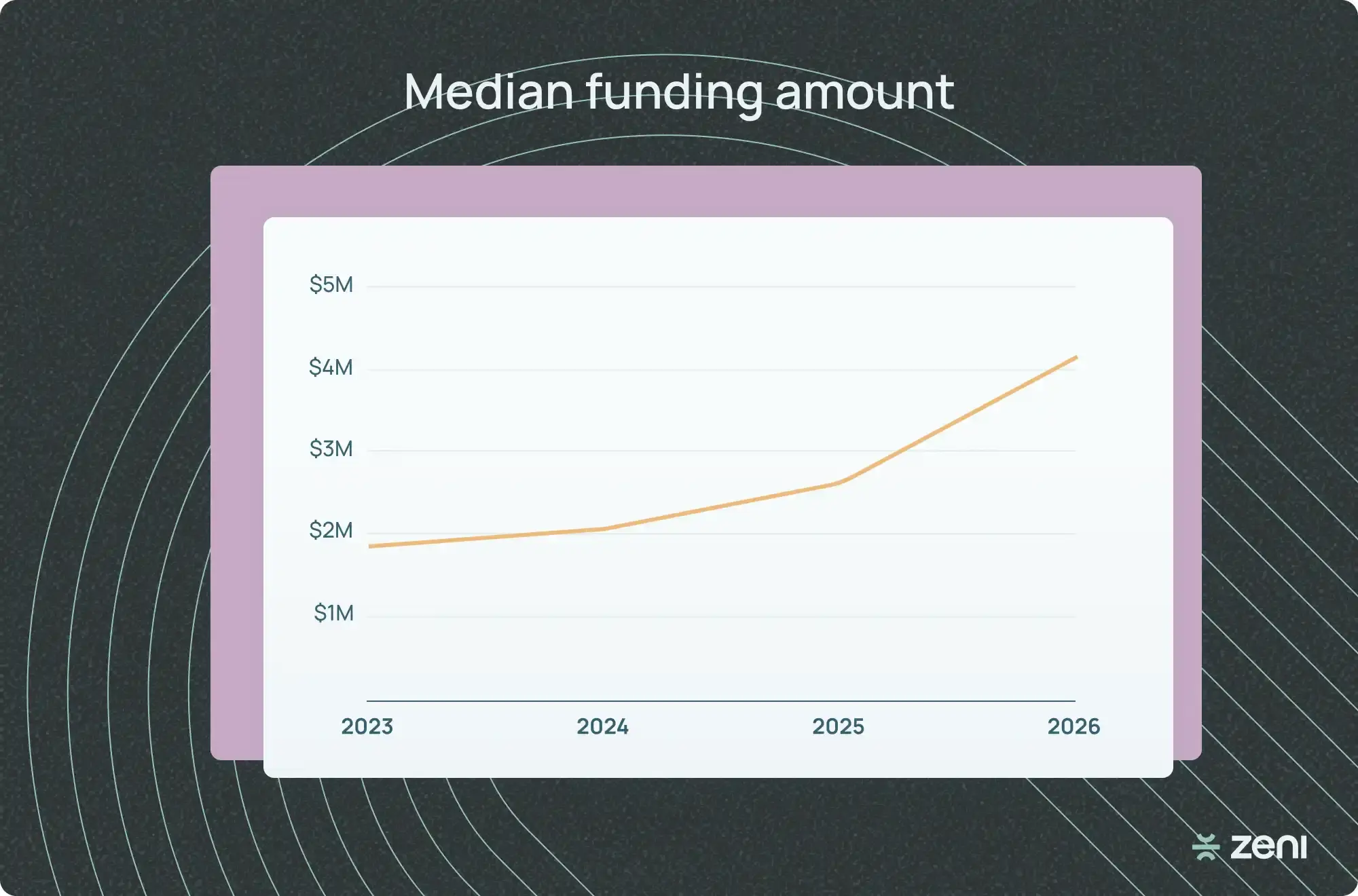
While median funding amounts have also seen a significant increase, the growth has been less dramatic because median values are less affected by a handful of outsized funding rounds.
These trends were especially pronounced between 2025 and 2026. In this period, the average funding amount increased 221% from $17.3 million to 55.6 million, compared to an increase of just 49% when it went from $11.6 million to $17.3 million the year before.
Once again, this is largely due to OpenAI’s exceptional success. In the first half of 2023, the biggest funding round was $6.5 billion. In 2025, OpenAI raised $40 billion—over six times more—then secured another $122 billion in the first half of 2026.
OpenAI's record-breaking funding rounds reflect a broader trend in venture capital funding: artificial intelligence (AI) has become the dominant force in the industry. Of the 1,000 largest funding rounds in the first half of 2026, 42% involved AI companies.
In addition, those AI deals accounted for approximately $367.8 billion in funding. That's about 74% of the total $498.2 billion invested in 2026, and significantly exceeds the capital raised across all industries in the first six months of 2025.
This is a clear indicator that venture capital’s belief in AI is strong. Firms are seeing the demand for AI products continue to grow across nearly every industry and investing heavily in an attempt to benefit from the metaphorical gold rush.
Another potential reason for the trend is that many AI startups require unusually large amounts of capital. Training models, purchasing specialized chips, and expanding computing infrastructure can require billions of dollars.
As a result, venture capitalists may be more likely to write larger checks for companies they believe can become category leaders. While OpenAI is the most visible example, this trend can also be seen in the averages.
For example, an AI funding premium appears at Series A, where the median round is 17% higher for AI companies than it is for non-AI companies. This premium is even higher with Series B (25%) and Series C (48%).
While that doesn’t mean non-AI companies can’t secure venture capital, founders should recognize where investor confidence is shifting. A founder with a credible AI strategy may be better positioned to stand out in today's VC fundraising environment.
You can learn more about priced round and startup funding statistics in some of our other research reports on Series C Funding, Series D Funding, and Startup Success Statistics.
AI is dominating venture capital investments in the first half of 2026 by virtually every measure. However, it’s not the only industry experiencing standout results so far.
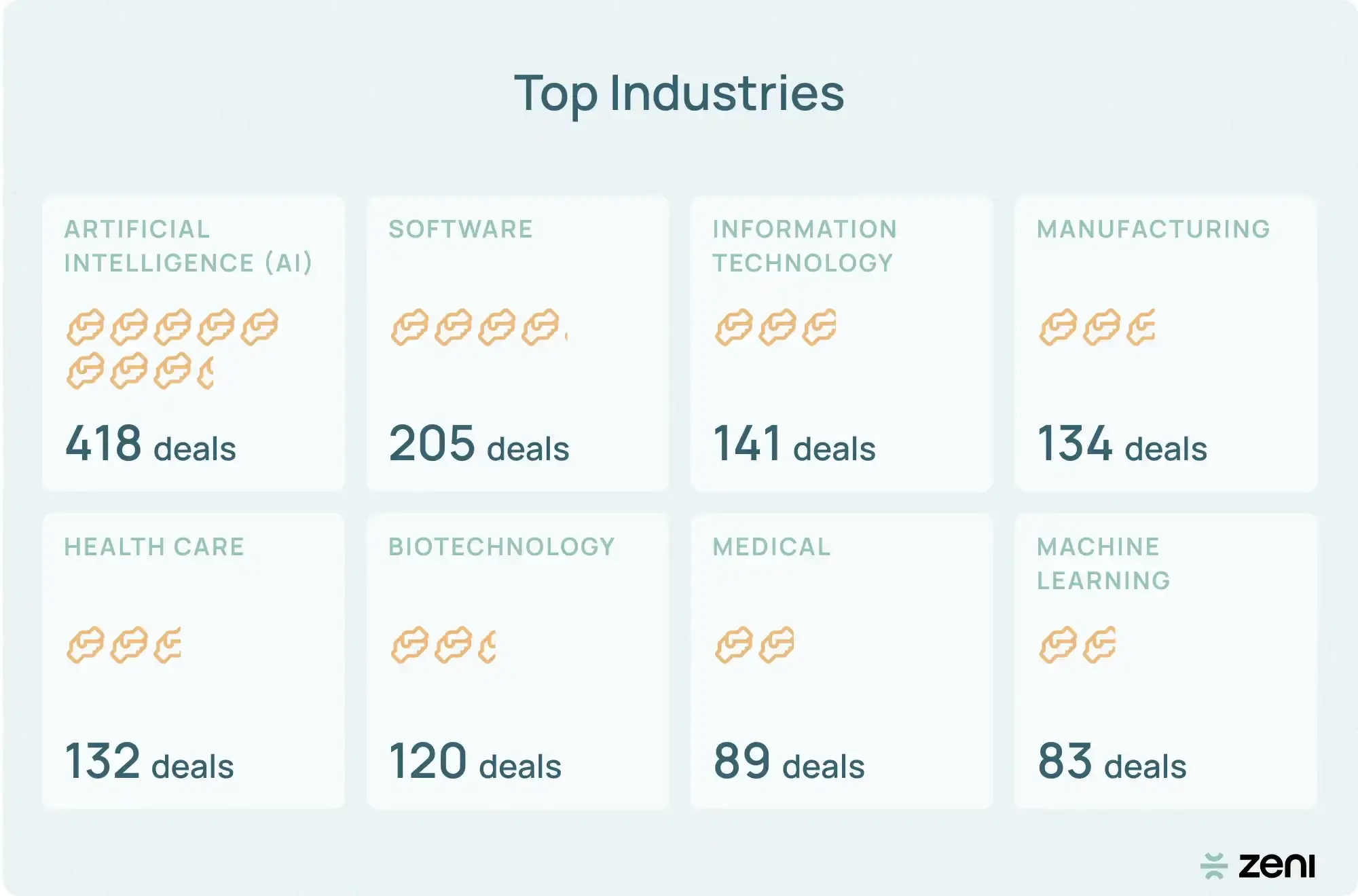
For example, software companies received the second-most investments with 205 of the top 1,000 deals. The industry also raised $139.2 billion in funding, putting it in sixth for the greatest amount of venture capital fundraising.
Similarly, Information Technology companies were associated with 141 of the top 1,000 deals and responsible for raising $186 billion, putting it behind only AI, machine learning, and generative AI.
Generally, all of the industries surrounding AI have benefited from venture capital interest in the technology. However, manufacturing, healthcare, and biotechnology companies have also continued to attract a meaningful percentage of VC deals.
The U.S. remains the undisputed leader in venture capital, accounting for 539 of the world’s funding rounds in the first half of 2026. It also raised approximately $357.7 billion, far more than any other country.
China ranked second with 200 deals and $39.4 billion in VC funding, while the United Kingdom came in a distant third with 54 deals totaling $12.8 billion.
Within the U.S., California similarly dominates the venture capital landscape. Nearly half (49.7%) of all U.S. funding rounds went to California companies, which collectively raised $314.6 billion.
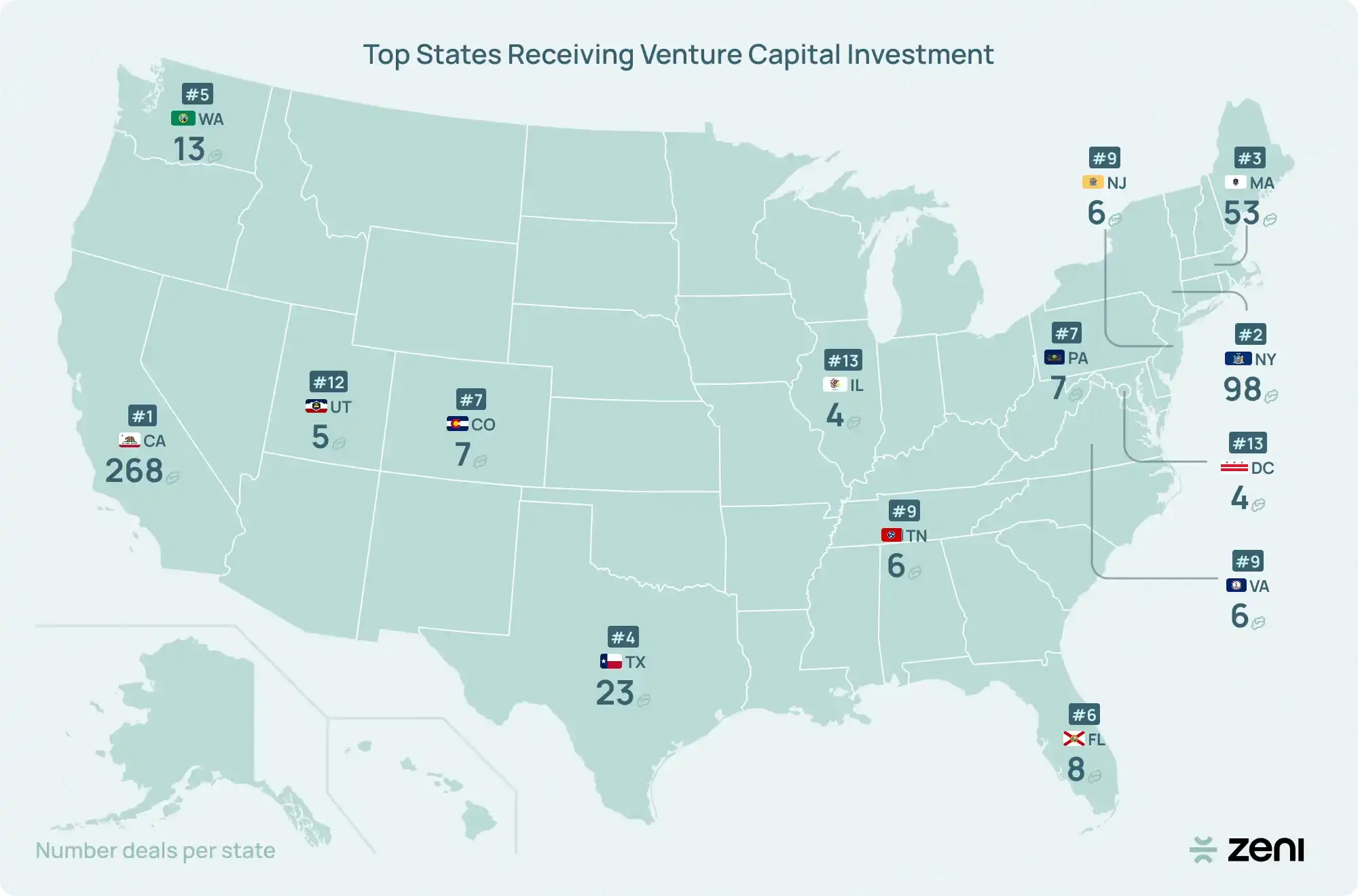
New York was second with 98 deals and $15.6 billion in funding, while Massachusetts finished third with 53 deals and $7.5 billion. Together, these three states account for more than three-quarters (77.7%) of all U.S. deals.
The data in this report was collected from Crunchbase Pro and reflects venture capital activity between January 1, 2026, and June 30, 2026. Historical comparisons use the same six-month period for each year to ensure consistency.
Industry and geographic analyses are based on the 1,000 largest funding rounds available through Crunchbase Pro's export tools.
Schedule a demo to see Zeni’s AI bookkeeping at work.