.avif)
.png)

Ready to invest in AI?
Schedule time with Zeni's finance pros to learn more.
Thank you! Your submission has been received!
Oops! Something went wrong while submitting the form.
Across more than 6,000 startup investments dating back to 2005, the Y Combinator success rate is an impressive 9.98%.
In this research report, we’ll explore which sectors those successful companies belong to, what kind of exits they completed, and how many eventually became Unicorns.
We’ll also discuss which types of Y Combinator companies have historically had the highest failure rate and which are experiencing the most success in 2026.
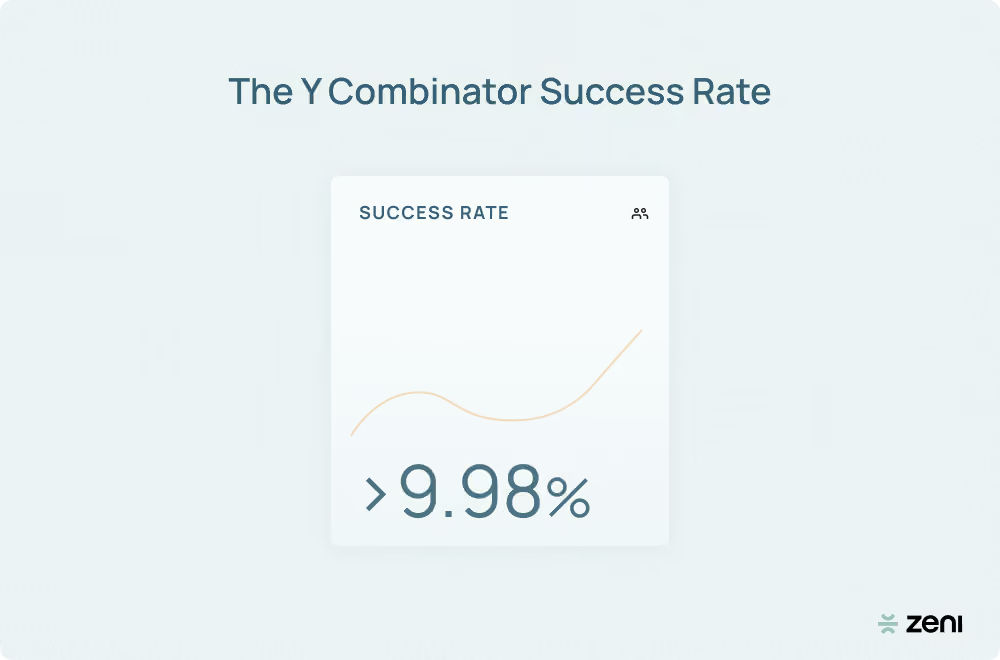
Since its inception in 2005, Y Combinator has become the gold standard for startup accelerators. It’s invested in roughly 6,633 companies to date, with these startups reaching a combined valuation of over $1 trillion.
Determining which portfolio companies count as a “successful startup” is a somewhat subjective exercise, but one practical approach is to include all those that have exited through mergers and acquisitions (M&A) or by going public.
Currently, 641 Y Combinator startups have been acquired or merged with other companies, while 21 have reached the ultimate milestone of an initial public offering (IPO). This works out to a startup success rate of 9.98%.
That said, 84.23% of Y Combinator’s portfolio remains active, with their ultimate success yet to be determined. Meanwhile, only 5.79% have decidedly failed, either by going inactive, declaring bankruptcy, or selling off their assets.
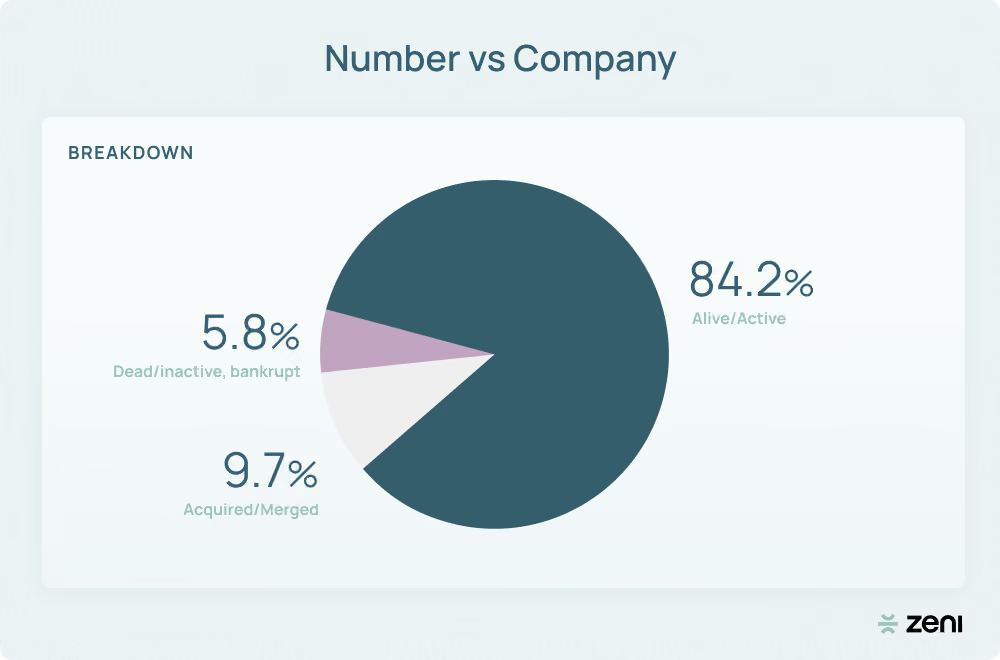
See below a detailed summary of its Y Combinator’s investment outcomes:
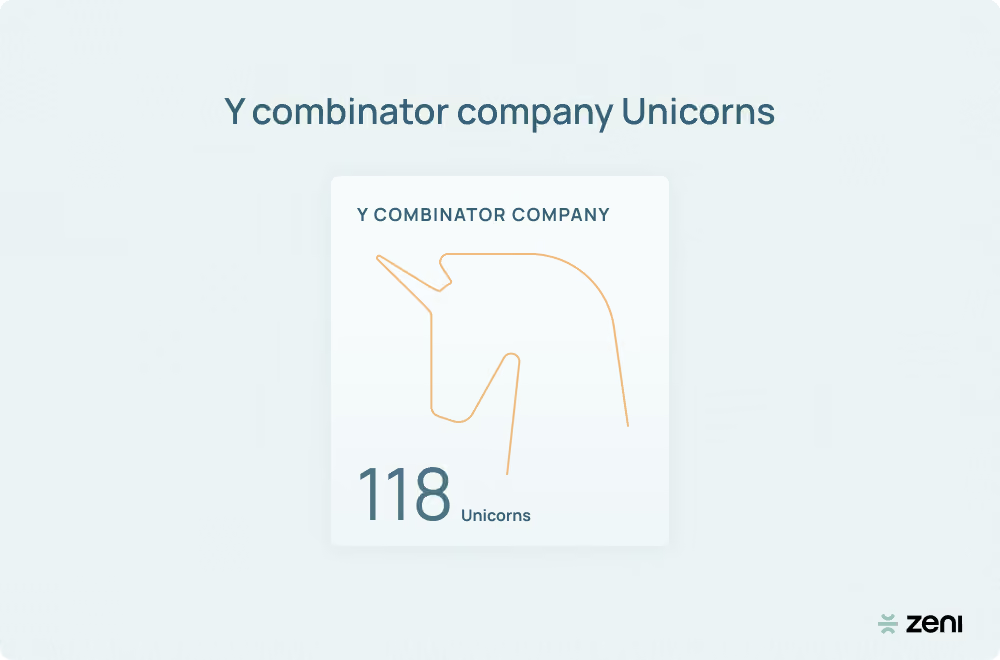
In the world of venture capital (VC), a Unicorn refers to a startup that has achieved a private valuation of at least $1 billion. Reaching this status is the primary goal for many ambitious founders, but it remains a vanishingly rare feat.
Of the 6,633 startups that Y Combinator has backed since 2005, just 118 companies have successfully become Unicorns. This represents a conversion rate of approximately 1.78% across the accelerator program’s portfolio.
These Unicorns include several of the world’s most successful technology companies in recent history. For instance, some notable examples include:
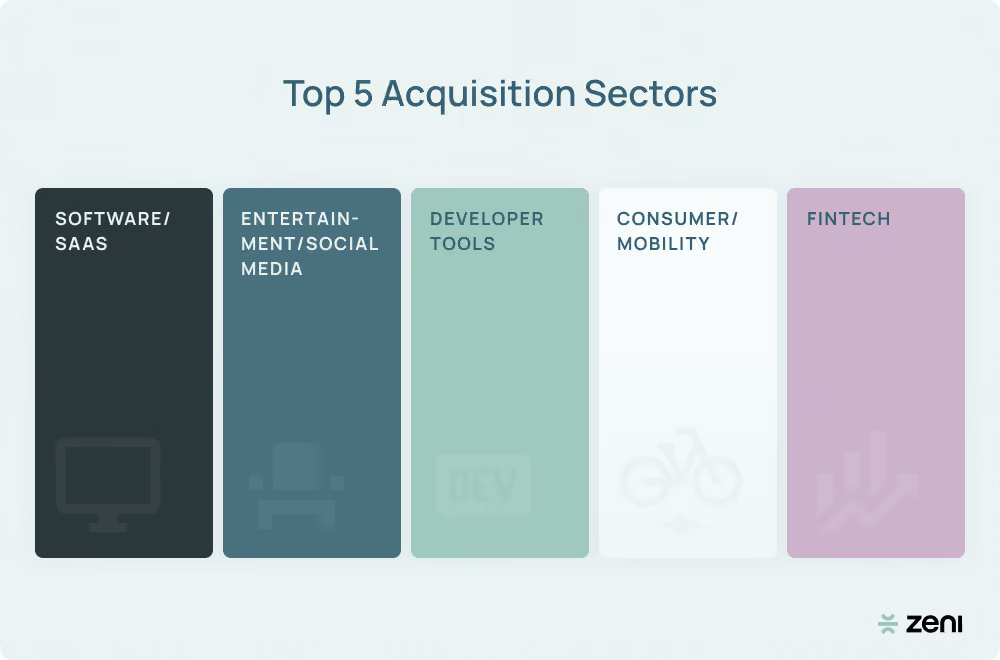
Of the 641 Y Combinator companies that have successfully completed M&A exits since 2005, the software and software-as-a-service (SaaS) sector has been responsible for the largest number of transactions.
These deals have involved everything from infrastructure startups to enterprise software companies. Notable examples include Weebly’s $365 million acquisition by Square in 2018 and Salesforce’s $250 million acquisition of Heroku in 2011.
The entertainment and social media sector has had the second-highest exit volume, largely driven by content platforms and gaming companies. It also saw one of the most lucrative exits in Y Combinator history in Twitch’s $970 million deal with Amazon.
There has also been significant historical demand for developer tools and engineering infrastructure, as well as for consumer mobility startups. The latter was responsible for Y Combinator’s top deal by exit value: General Motors’ $1 billion acquisition of Cruise.
Lastly, FinTech has seen smaller total numbers than these other top sectors, but its activity has been growing more rapidly in recent years.
Zeni’s SaaS accounting software solution combines cutting-edge automation with dedicated support from human experts.
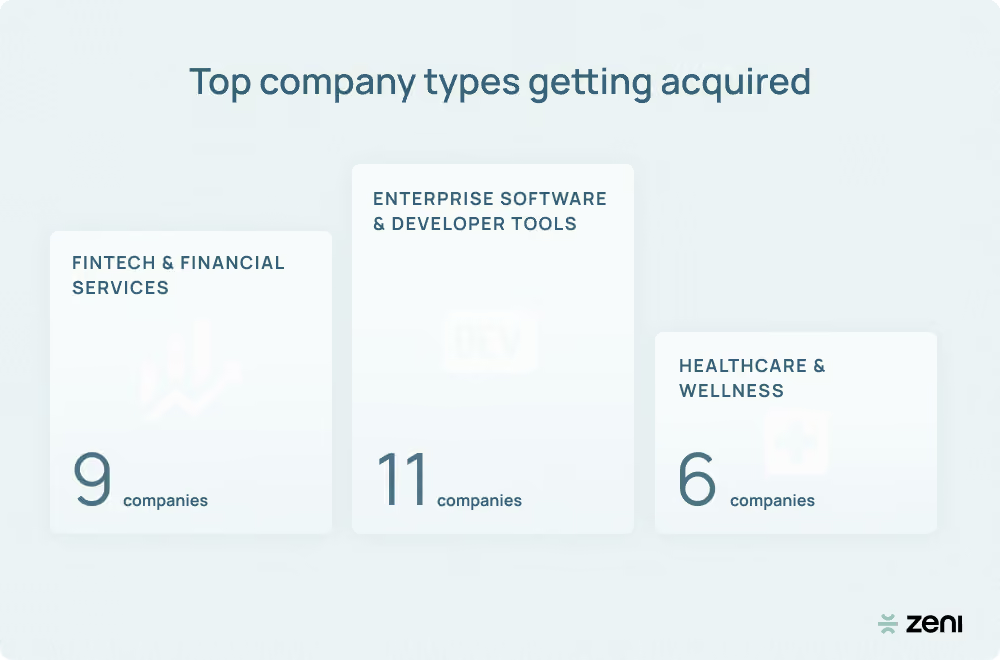
Market trends and investor sentiment heavily influence startup acquisition activity, with focuses often shifting as new technologies emerge. So far, Y Combinator company acquisitions in 2026 reflect this pattern.
There were 34 deals completed this year to date, and 26 (76.47%), took place in the following sectors:
Enterprise software and developer tools led the pack with 11 total acquisitions. Notable deals included ClickHouse and ServiceNow’s acquisitions of Langfuse and TraceLoop, both of which are large language model (LLM) engineering platforms.
FinTech and financial services were close behind with nine acquisitions. Two standouts included Capital One’s acquisition of the popular spend management platform Brex, as well as Kraken’s purchase of Magna, a digital asset and token management company.
Meanwhile, healthcare and wellness has seen six acquisitions. These deals largely targeted operational efficiency and workflow automation companies, such as CareRev, a healthcare staffing platform serving hospitals.
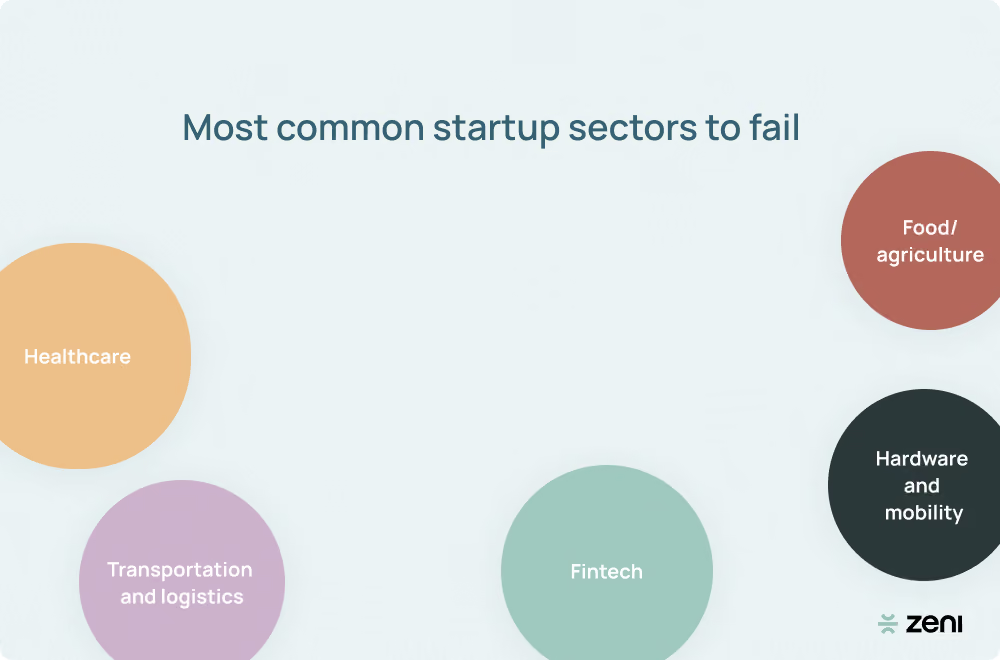
The Y Combinator may have a high success rate compared to the rest of the startup market, but it isn’t without its share of failed investments. To date, 384 (5.79%) of its companies have become inactive, gone bankrupt, or had their assets purchased.
While industry data isn’t readily available for all of these companies, many of them operated in the following sectors:
A significant portion of Y Combinator’s failed startups also operated in the food and agriculture sector—which accounts for 12.5% of startup failures generally—as well as the hardware and mobility sector.
Zeni’s startup accounting services can help you streamline your cash flow management and maintain the liquidity you need for growth.
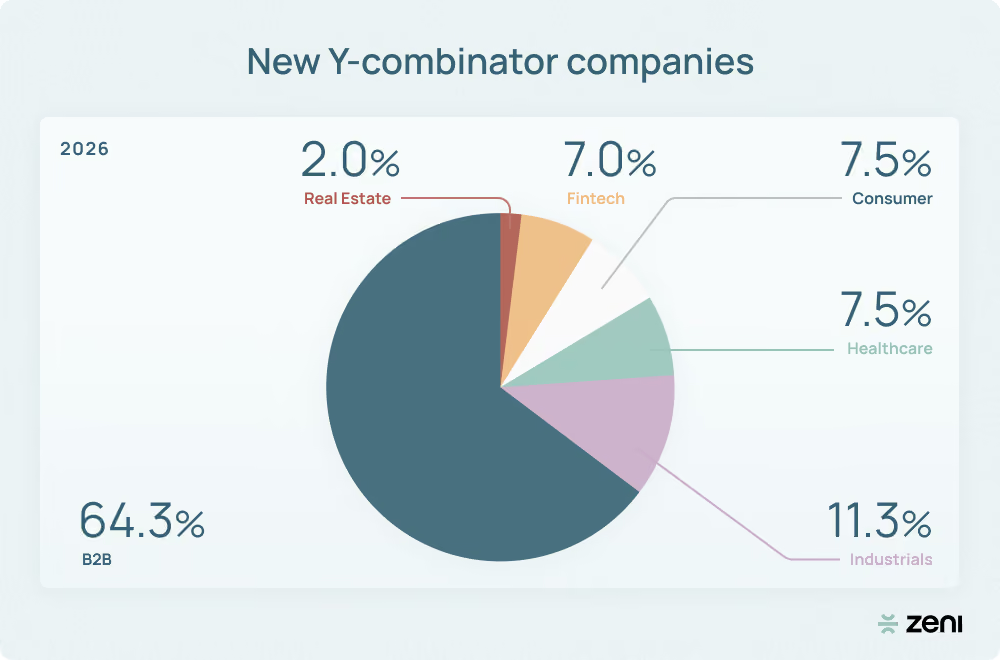
Y Combinator has selected 442 startups for seed funding across its most recent batches. This includes those slotted for investment in Fall 2025, Winter 2026, Spring 2026, and Summer 2026.
Of these, 284 are B2B software companies, representing a significant majority (64.25%). The industrial sector is a distant second with 50 companies (11%), while healthcare and consumer companies are tied for third at 33 (7.5%).
That said, artificial intelligence (AI) is clearly the real theme of Y Combinator’s current investment strategy. Roughly 49% of these companies have the terms "AI," "agent," "copilot," "LLM," or "machine learning" in their one-line description on Y Combinator.
Specifically, there’s a heavy emphasis on agentic AI, with 22% using language related to the technology. Most of this subset is focused on building AI agents, providing the infrastructure they need, or offering them directly.
There’s also a notable shift toward vertical AI, aiming to edge out the competition by niching down. Dozens of these AI company tools are exclusively for a single industry, such as restaurants, commercial lenders, and semiconductors.
Schedule a demo to see Zeni’s AI accountant agent in action, capable of automating everything from journal entries to flux analysis.
![Venture capital trends and statistics in 2026 [new data]](https://cdn.prod.website-files.com/642b3b2440806566d7573934/6a7a31b1282ad91171af9142_venture-capital-trends-and-statistics_%402x.webp)

.png)