.avif)


Ready to invest in AI?
Schedule time with Zeni's finance pros to learn more.
Thank you! Your submission has been received!
Oops! Something went wrong while submitting the form.
Reporting is one of the most time-consuming aspects of financial management for businesses, especially when investors are involved. From aggregating data to creating pitch-ready documentation, it’s a significant undertaking when done manually.
Investment reporting automation is key to streamlining the process. This guide explores the technology, how it works, and what it can offer your business. We’ll also discuss tactics you can use to structure your search for a solution.
Investment reporting automation is a type of software that streamlines the process of reporting financial data to investors. It automatically tracks your company’s activities and translates them into structured investor reports and digestible visuals.
For startups and growth-stage companies, these outputs are essential for fundraising. Investors use them to evaluate the strength of your financial performance and position, especially during initial risk management conversations and due diligence.
Even after securing funding, it’s important to keep your existing investors in the loop. Automated reporting systems can provide them regular updates with minimal prompting from finance teams, helping to maintain transparency and ground relations.
Without automation, investment reporting often requires a significant amount of manual work. Finance teams can spend hours consolidating data, validating key figures, and preparing materials for presentation to stakeholders.
Automated solutions streamline this repetitive task by pulling financial data directly from integrated systems. They can also update your accounting records in real time and summarize them in digestible formats.
Beyond historical report automation, more advanced systems sometimes support predictive analytics. This involves using company data, current market trends, and various assumptions to generate forward-looking forecasts or projections for investors.
Automating investment reporting can have several financial and operational benefits, especially for startups and other rapidly growing businesses. Here are some of the most significant ones to consider:
Ultimately, investment reporting automation reduces the manual work involved in preparing and presenting data to investors. This has benefits that spread through your operation, bolstering overall efficiency and potentially improving financial outcomes.
In some cases, reporting automation may be the key to securing the investor funding your startup needs to reach its next stage of development.
Investment reporting automation solutions vary in scope, but they typically share a handful of core capabilities. Certain fundamentals are necessary for automating financial reporting and investor relations. These generally include:
Investment reporting solutions may not support the same depth of function across these features. As a result, it’s important to test systems firsthand before committing to make sure they can support your business’s current and evolving needs.
Investment reporting automation can serve slightly different purposes depending on your company’s structure and stage of development. The underlying technology is often fairly consistent, but the use cases can differ.
Here’s an outline of the typical progression:
You may be able to get by with manual processes in the earliest days of your organization, when finances are often straightforward. However, as you continue to evolve, automation becomes increasingly necessary.
Beyond a certain level of scale and complexity, the operational benefits begin to eclipse the costs, eventually becoming all but a necessity for informed decisions.
To learn more about what investors do with the reports you provide, read our guide, How Investors Use Financial Statements.
If your business is at a stage where it could benefit from investment reporting automation, choosing from the many options can be challenging. Here’s a step-by-step framework you can use to find the right solution for your needs:
Implementing reporting automation is typically less disruptive than adopting something like an enterprise resource planning (ERP) system. However, it can still be a challenge, especially if your business is already established.
If you do need to connect your new system with an existing tech stack, take that into account when considering solutions. Every customization you make to support the integration adds cost and complexity.
Automation can significantly increase the efficiency of processes related to financial reporting and investor relations. This can have significant benefits for growing businesses, including cost savings and easier access to funding.
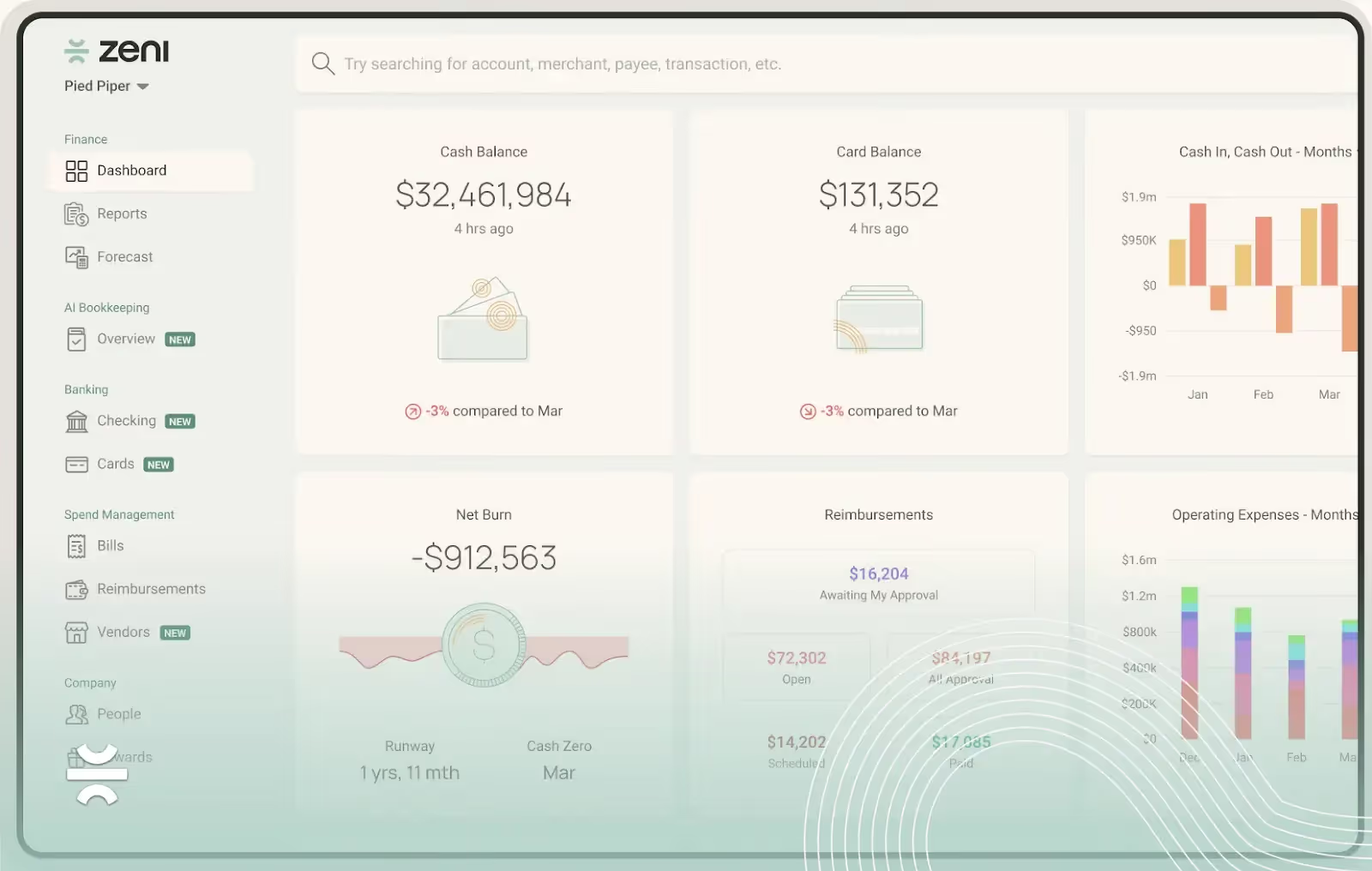
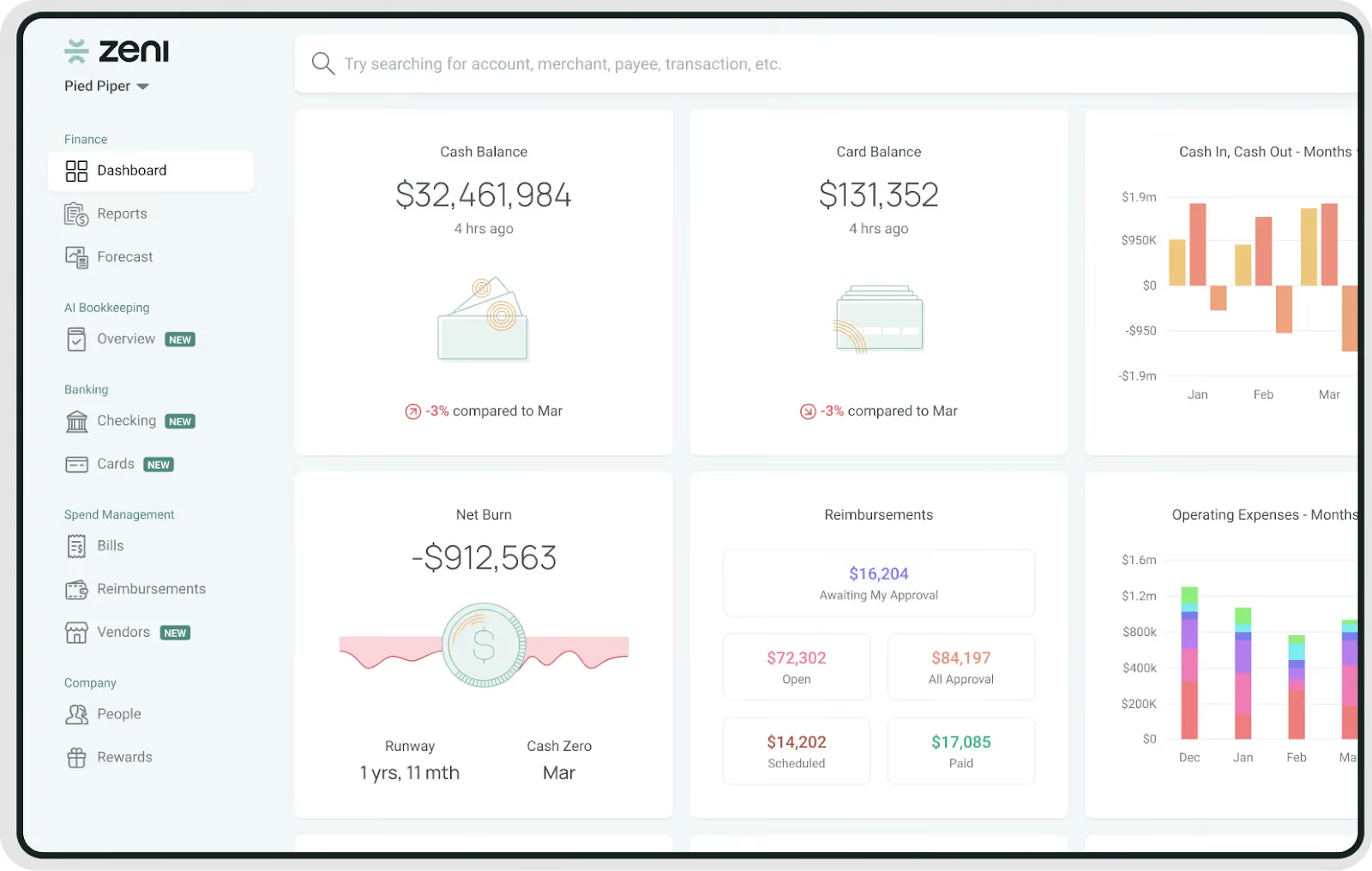
Zeni is a comprehensive financial management platform with built-in investor reporting features. That includes AI bookkeeping, real-time KPI dashboards, automated financial report generation, and more.
In addition, Zeni offers a suite of integrated financial products and services, including everything from employee reimbursement software to fractional CFO services. As a result, you never have to worry about connecting disparate solutions.
Ready to see Zeni in action? Schedule your free demo today.
![Venture capital trends and statistics in 2026 [new data]](https://cdn.prod.website-files.com/642b3b2440806566d7573934/6a7a31b1282ad91171af9142_venture-capital-trends-and-statistics_%402x.webp)


.avif)